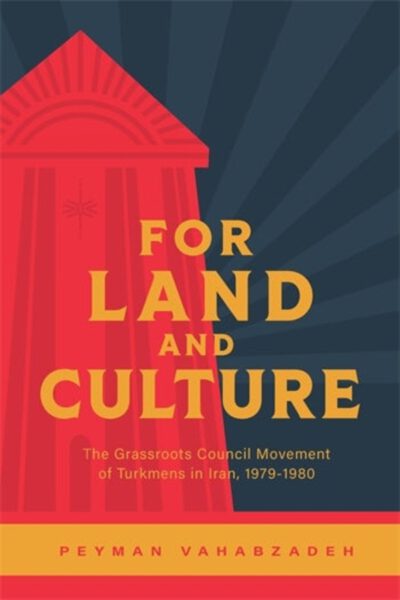

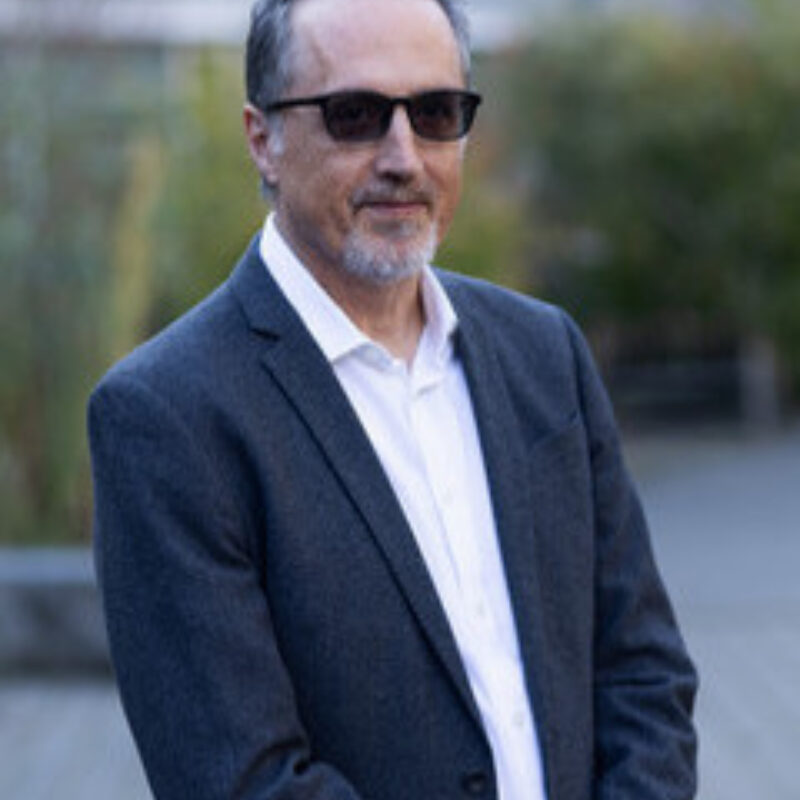
The uprising in Iran has garnered a lot of interest on the internet and media lately. There are many conflicting narratives and a lot of possibilities of what the future holds for the Iranian people. On behalf of Fernwood publishing Art Bouman interviewed Peyman Vahabzadeh, author of For Land and Culture, about his thoughts on the unfolding events.
Art Bouman (AB): We're hearing a lot in the media about the economic crisis that detonated the uprising that is unfolding across Iran right now. How are you reading it and why do you think it has erupted in the way it has?
Peyman Vahabzadeh (PV): The January 2026 movement of Iranians should be understood in the context of the collapse of the country’s currency and subsequent staggering inflation. The protest movement has been met by brutal repression of the regime that shut down the internet to carry out bloodbath in the streets. Anti-regime rallies have taken place in over 300 cities and towns, and the number of protesters killed is projected in the thousands, with thousands more arrested and thousands injured and maimed. What we are witnessing is certainly a countrywide massacre, possibility a genocide. I am writing these lines after 2 weeks into this protest movement.
This latest protest movement started with the rallies of bazaar shopkeepers against soaring inflation. Soon it became the uprising of the poor, disenfranchised, youth, and women to overthrow this unresponsive regime. These protests trail a number of countrywide mobilizations of the poor and marginalized between December 2017-January 2018, November 2019 (that extended into early 2020), and the summer 2021 water protests in the oil rich province of Khuzestan. These were primarily movements of the poor in one of the richest countries in the world (in terms of resources) where 80% of the population lives below the poverty line. To this list, of course, one must add the world-historical “Woman Life Freedom” protest movement of September 2022, that lasted 100 days. It revolutionized Iranian social life but could not connect with the concerns of the poor. All of these protests lost momentum within months due to the brutal crackdown by the repressive machinery of the state. Each movement left thousands of casualties, imprisoned protesters, and those who escaped the country. These movements left behind a growing pent-up anger. It has been clear that the people do not want this regime.
The country’s economy is in ruins. The Islamic Republic has invested thousands of billions of dollars funding its proxies in the region (nearly all of them crushed or in disarray at the moment) and developing a useless nuclear program as a deterrent (which failed: June 2025 Iran-Israel 12-day war which depleted Iran’s defence capacity). The international sanctions have impoverished the people and fed a gluttonous kleptocracy.
The Islamic Republic has never been in such a crisis. The regime is dominant but dead, as people of Iran are clearly ungovernable. With the threat of a USA military operation against the regime, the situation right now is volatile.
AB: How does the story you tell about the Turkmen commune movement help us understand the revolutionary character of the contemporary struggle, who are the actors, what are the factors and features that we should be paying attention to?
PV: My study of the grassroots Turkmen council movement in 1979-1980 shows that progressive, egalitarian, and popular are possible even in the context of one of the most reactionary theocratic regimes, which at the time was in the process of consolidating its power. For one year, the Turkmens (hats off to them) created a system of self-governance that was in every way the negation of the stagnant and discriminatory values and religiously dogmatic worldviews of the rising Islamic Republic. They created a participatory and democratic council system, ended land capitalism, made land into commons, harvested collectively, developed their villages’ infrastructures, educated themselves, and made significant strides toward empowerment of rural women. They maintained peace while facing state violence, even when exercising their legitimate right of self-defence. The Turkmen council movement was the de facto body of self-governance of at least half-a-million people.
The Woman Life Freedom of 2022 introduced a similar possibility. It was a movement of women, minorities, and disenfranchised with a democratic and egalitarian vision.
While the people are fighting for their freedom, the movement’s vision is being represented by reactionary, expatriate monarchists that poses itself as the only “real” alternative to the regime. The monarchists have been supported by Israel (and supported Israel’s genocide in Gaza) and currently lobby USA to attack Iran and change the regime. Evidenced by their rallies outside of Iran, pro-monarchists have proven themselves as extremely intolerant toward other Iranians, trying to silence them. Thanks to certain far-reaching expat media, they now dominate the virtual world and have gained considerable influence within the country.
The Turkmen movement shows that in this stage, Iranian people can create their workplace, neighbourhood, campus, and other councils and create a strong network of community planning and mutual aid to keep the momentum of the movement and exert the people’s power. This is possible because of the continued presence of civil society through sustained protests of workers, pensioners, teachers, nurses, university students, and people with chronic illness (and many others) in the past 15 years.
AB: What are the dangers at play?
PV: People often imagine “regime change” in the way the 1979 revolution happened: the Shah left after months of street protests, the Ayatollah returned from exile and the clerics took over. That revolution and the age in which such clear transitions of power were possible, in my view, are gone. While being liberated from this lethargic and repressive regime is always a welcome prospect, it is not clear what the outcome in the volatile Middle East will be. Balkanization of Iran or a weak state (such as Iraq and Syria) has been a Zionist pursuit all along. A foreign intervention scenario will spell disaster for Iran’s peoples and future. Even in the hypothetical case of a clean transition, it is not clear what the next Iran will look like: progressive voices of women, minorities, workers, and advocates of social justice are being silenced and the struggle for their causes will only continue in future.
AB: What is giving you hope for this movement and its contribution to global justice?
PV: Alas, I cannot share the optimism implied in this question. The situation is very volatile. Civil society is under tremendous pressure. The regime’s brutal machinery of repression is hard at work, while the US President makes threats of military action—the extent of which remains anybody’s guess.