

Becoming an Ally 4th ed. - Book Review
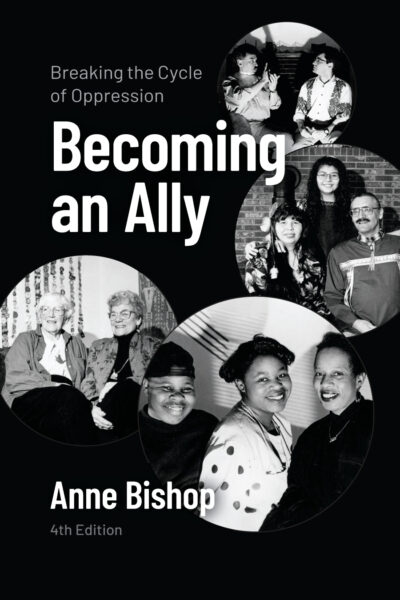
Becoming an Ally, 4th Edition
Breaking the Cycle of Oppression
Anne Bishop’s Breaking the Cycle of Oppression: Becoming an Ally 4th ed. is a deeply reflective and practical guide for individuals seeking to understand oppression and actively work toward social justice. The book challenges readers not only to examine systems of inequality but also to confront their own roles within those systems. Bishop’s approach blends theory, personal reflection, and actionable strategies, making it both intellectually engaging and personally transformative.
Bishop explains that individuals with “first voice”—those who directly experience oppression— can engage allies as a form of strategic support while maintaining their own leadership. Bishop strongly advocates for following the leadership of “first voice” individuals. Allies are encouraged to support rather than lead, recognizing that those who experience oppression are best positioned to identify solutions. Rather than creating dependence, this relationship is based on collaboration, where first voice identifies priorities and guides action. This dynamic reinforces the importance of centering lived experience while using allyship as a tool to strengthen efforts toward equity and social change. This includes leveraging one’s privilege in strategic ways—speaking up when it is less risky to do so but also knowing when to step back and amplify marginalized voices instead of overshadowing them.
Bishop explores the roots of oppression in depth, tracing how systems of power create divisions and hierarchies. She highlights how trauma is often used to maintain these hierarchies, with those in power perpetuating harm that reinforces inequality. This analysis challenges dominant liberal ideologies that focus narrowly on individual actions rather than systemic change. By shifting the lens to structural levels of oppression, Bishop pushes readers to see beyond personal intentions and toward broader social patterns.
A particularly powerful aspect of the book is its discussion of shame. Bishop argues that in the process of becoming an ally, shame, when acknowledged and processed constructively, can be a catalyst for growth. Rather than becoming defensive when confronted with one’s privilege or complicity, she urges readers to sit with discomfort and use it as motivation for change. This requires a conscious effort to recognize one’s defensiveness, and to understand that expressions of pain from oppressed groups are not personal accusations but reflections of systemic injustice.
The book is also highly practical, offering learning activities that help clarify key concepts such as personal versus structural oppression. These exercises encourage readers to reflect on their own experiences, biases, and positions within systems of power. Bishop repeatedly emphasizes that becoming an ally is not a fixed identity but an ongoing process of learning, unlearning, and action.
Central to this process of becoming an ally is the idea that allies must engage in their own healing and liberation. Bishop argues that working against oppression is not only about helping others but also about freeing oneself from the constraints of dominant systems. This involves continuous personal learning about oppression.
The book underscores that allyship is not about recognition or control but about contributing to the dismantling of historical injustices. Allies play a role in helping to solve these problems, but they must do so in partnership with, and accountability to, oppressed communities. This requires humility, patience, and a willingness to be guided.
In conclusion, Breaking the Cycle of Oppression: Becoming an Ally is a compelling and necessary read for anyone committed to social justice. Anne Bishop provides both a critical framework for understanding oppression and a compassionate roadmap for action. By encouraging readers to listen deeply, reflect honestly, and act responsibly, the book moves beyond theory into meaningful practice. It challenges us to rethink our assumptions, confront our discomfort, and ultimately participate in building a more equitable and connected world.
Nursing Application:
This review of Breaking the Cycle of Oppression: Becoming an Ally by Anne Bishop highlights ideas that are directly applicable to nursing practice, particularly in providing equitable, compassionate, and patient-centered care. Nursing is not only a clinical profession but also a relational one, and Bishop’s emphasis on understanding oppression helps nurses better navigate the complex social realities that shape patients’ health experiences.
One of the most relevant concepts is the importance of “first voice” perspectives. In nursing, this translates to truly listening to patients and respecting their lived experiences as valid and essential sources of knowledge. Patients from marginalized groups often encounter barriers, discrimination, or mistrust within healthcare systems. By actively listening without defensiveness, nurses can build trust and create safer, more inclusive care environments. This aligns closely with patient-centered care, where individuals are seen as partners rather than passive recipients of treatment.
The idea that allies may also have their own experiences of oppression is particularly meaningful in nursing, a diverse profession where individuals bring varied backgrounds and identities. Recognizing both privilege and marginalization allows nurses to approach patients with greater empathy while remaining aware of power imbalances. For example, a nurse may understand what it feels like to be marginalized in one context but still hold authority in a clinical setting. This awareness encourages humility and reduces the risk of unintentionally reinforcing oppression.
Bishop’s focus on structural oppression is especially important in nursing. Health outcomes are not determined solely by individual choices but are heavily influenced by social determinants such as income, race, education, and access to resources. By adopting a structural perspective, nurses can move beyond blaming patients for their conditions and instead advocate for systemic changes. This might include supporting policies that improve access to care or addressing inequities within healthcare institutions.
The discussion of trauma and hierarchy is also highly relevant. Many patients have experienced trauma, including within healthcare systems themselves. Nurses must recognize that their position of authority can unintentionally trigger feelings of vulnerability or mistrust. Applying trauma-informed care—grounded in respect, safety, and collaboration—helps mitigate these effects. Bishop’s insights encourage nurses to be mindful of how power operates in everyday interactions and to prioritize patient dignity.
Another key takeaway is the role of shame and the need to move beyond defensiveness. In nursing, receiving feedback—whether from patients, families, or colleagues—is essential for growth. When confronted with biases or mistakes, it can be uncomfortable, but Bishop’s perspective reframes this discomfort as an opportunity to improve. Instead of becoming defensive, nurses can reflect, learn, and adjust their practice, ultimately leading to better patient outcomes.
The emphasis on ongoing learning and self-reflection is central to both the book and nursing practice. Healthcare is constantly evolving, and so is our understanding of social justice and equity. Engaging in continuous education about oppression allows nurses to provide more culturally safe and responsive care. Asking questions like “What do you need?” ensures that care is guided by the patient’s voice rather than assumptions.
Bishop’s discussion of allyship also resonates strongly with nursing advocacy. Nurses are often in positions where they can speak up for patients who may not be heard. This includes challenging discriminatory practices, addressing inequities in care, and advocating for vulnerable populations. At the same time, the idea of following the leadership of those who are oppressed reminds nurses to respect patient autonomy and avoid imposing their own solutions. Finally, the concept of leveraging privilege is highly applicable. Nurses can use their professional authority to address injustices, whether by influencing policy, educating others, or supporting marginalized patients. Importantly, this should be done in a way that amplifies patients’ voices rather than overshadowing them. Advocacy in nursing is most effective when it is collaborative and grounded in the needs of those being served. In conclusion, this review underscores that nursing is not just about treating illness but about addressing the broader social conditions that impact health. Bishop’s work challenges nurses to think critically about their role within systems of power and to actively participate in creating more equitable healthcare environments. By integrating these principles into practice, nurses can move beyond technical competence and embody true allyship, improving both patient care and the healthcare system as a whole.
— Tracy Dash RN, March 2026