
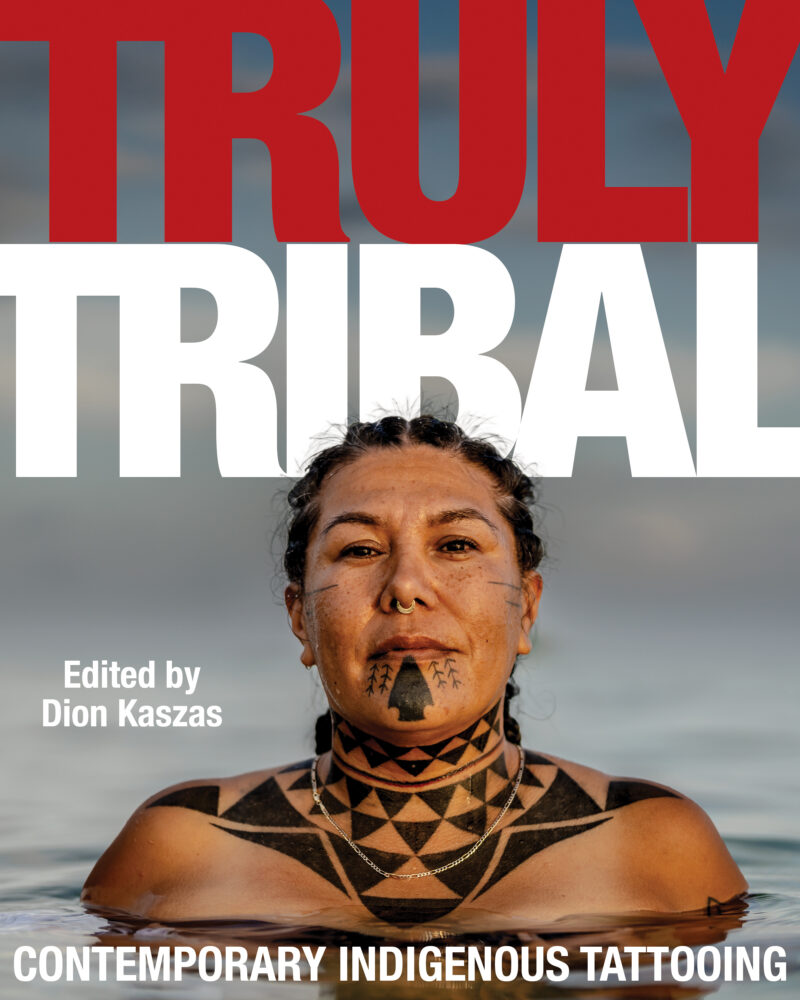
Truly Tribal
Contemporary Indigenous Tattooing
Eighteen Indigenous ancestral skin markers from Nations and cultures around the world discuss their reclamation of traditional tattooing practices.
About the book
After generations of colonial suppression, Indigenous tattooing practices have experienced a resurgence led by artists and informed by community stories, protocols, and Elders. In Truly Tribal, eighteen Indigenous ancestral skin markers from Nations and cultures around the world come together to discuss their reclamation of tattoos as tangible reminders of their communities’ enduring rights, relationships, and responsibilities.
Alongside over 250 stunning photos of their work, practitioners within this anthology discuss restoring a tradition that has survived colonial erasure, including the revival of ancestral tattoo designs, symbols, and motifs; the re-envisioning of meaning and protocols; and the refashioning of ancestral application methods, such as the use of bone tools and pigments alongside contemporary tools and inks. Their expert academic analysis and heartfelt storytelling respond with authenticity to a global awakening of cultural mark-making practices, offering teachings that can be shared while acknowledging that some ancestral inheritances are not for public consumption. This beautiful anthology embodies the phrase, “about us, from us, for us.”
With contributions from: Missy Dunn-Mahan, Julia Mageʼau Gray, Donita Vatuinaruku Hulme, Dion Kaszas, Yasbelle Kerkow, Terje Koloamatangi, Mel Lefebvre, Nolan Malbeuf, Jerrid Lee Miller, Jacqueline Merritt, Sheri Osden Nault, Julie Paama-Pengelly, Natalia Roxas, Nathalie Standingcloud, Gordon Sparks, Anne Spice, Dulcie Stewart, and Nahaan.
What people are saying
Dr. Sharon Fortney, Klahoose First Nation, Sr. Curator of Indigenous Collections, Engagement and Repatriation at the Museum of Vancouver“In Truly Tribal: Contemporary Indigenous Tattooing, Nlaka’pamux artist and scholar Dion Kaszas brings together a diversity of Indigenous tattoo practitioners to demonstrate how memory and identity is being reconnected to knowledge of place, and material culture, for those working to reassert Indigeneity around the globe. The stories shared by the featured skin markers are contemporary and personal, yet united in situating tattooing as part of ongoing efforts to reclaim a larger web of traditional knowledge in the ongoing wake of colonialism. Although tattoos are organic and temporary, linked to the lifespan of the individual that wears them, the knowledge surrounding their creation is holistic and dispersed. This inspiring publication, authored by Indigenous creators, is a significant contribution to our understanding of how contemporary Indigeneity is being expressed.”
Dr. Sean Mallon, Senior Curator Pacific Cultures, Museum of New Zealand Te Papa Tongarewa.“In Truly Tribal, tattooist, podcaster and born-again coyote Dion Kaszas has assembled a rare collection of essays reflecting on the challenges, opportunities and history of contemporary Indigenous tattooing. With perspectives from Turtle Island and Oceania, Truly Tribal is one of very few books written by Indigenous tattooists and other creatives about the work they do. Through their rich and often personal accounts they write about cultural loss and recovery, highlighting the value of tattooing as a resource and practice that indelibly marks who we are and where we come from. Truly Tribal is a timely record of indigenous tattooing, but also a significant contribution to our understanding of indigenous cultural politics and the projects of cultural revival and survivance.”
Contents
- Chapter 1:: Introduction: Coyote Juggles His Eyes (Dion Kaszas)
- Chapter 2:: A Visual Language: Poapoa - Skin Marking in Mekeo, Central Province, Papua New Guinea (Julia Mageʼau Gray)
- Chapter 3:: Cherokee Tattoos: Medicine for the Marked (Jerrid Lee Miller and Nathalie Standingcloud)
- Chapter 4:: He Kākano Ahau I Ruia Mai I Rangiātea: I Am a Seed Which Was Sewn in the Heavens of Rangiātea (Julie Paama-Pengelly)
- Chapter 5:: Na Veiqia Meu Talanoa: Skin Marking for Indigenous Fijian women with The Veiqia Project (Dulcie Stewart, Yasbelle Kerkow and Donita Vatuinaruku Hulme)
- Chapter 6:: Embodied Fonua: Reconstructing Tātatau in Aotearoa (Terje Koloamatangi)
- Chapter 7:: 7Estez: I am Tattooing (Jacqueline Merritt)
- Chapter 8:: Nlaka’pamux Skin Marking: Gathering Pieces of Coyote and Breathing Life into Practice (Dion Kaszas)
- Chapter 9:: Skin Marking to Heal: Ancestral Skin Marking as Healing and (re)Connection for Indigenous 2SLGBTQIA++ (Mel Lefebvre)
- Chapter 10:: Foregrounding Care: Tattooing in Caring Relationship to One Another and the Land (Sheri Osden Nault)
- Chapter 11:: PrePhilippine Living Traditions: Motifs and Practices from the Filipino Diaspora (Natalia Roxas)
- Chapter 12:: The Stories that Make Us: Tracing Ancestral Lines of Responsibility and Connection (Anne Spice)
- Chapter 13:: Emerging from the Tides: My Community and I (Nahaan)
- Chapter 14:: Tohono O’odham and Yuchi: Reclaiming Ancestral Tattoo Practices (Missy Dunn-Mahan)
- Chapter 15:: Learning the Visual Language of the Land: Mi’kmaw Blackwork (Gordon Sparks)
- Chapter 16:: Wahkóhtowin: Building Connections across Time for Those That Are Coming (Nolan Malbeuf)