

Rousing The Radicals - The Long Sixties Book Review
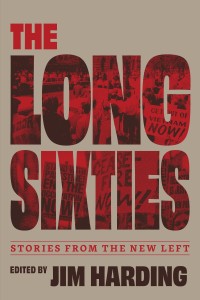
The Long Sixties
Stories from the New Left
A throw back to the 1960s can be unnerving. It is hard to imagine so radical decade, the dawning of the so- called “Age of Aquarius” a period associated with unstable, unbridled energy.
Peacenicks, hippies, hedonists, radicals, feminists, Blacks and everyone else who felt systematically cheated by the establishment launched widespread revolts against constraints and staged countercultural revolutions for “peace and understanding.”
Veteran gadfly, environmentalist and Fort San author Jim Harding, a long- time left-wing activist has edited The Long Sixties: Stories from the New Left (Fernwood Publishing, 262 pp. $23.00) which recalls the contributions of seven Canadian activists who helped shape transformative policies during the period. The book will be launched at the Main branch of t he Regina Public Library on Saturday, April 11 at 2. p.m and at the the Qu’Appelle Valley Centre of the Arts in Fort Qu’Appelle on April 18.
“I firmly believed that important stories existed among the survivors who started their activism in the sixties,” he writes. But the project turned out to be much harder than imagined, with few takers and many, sometimes exhausted doubters along the way.”
Among the contributors, Peter Warrian reminds us that social activism began with the Catholic Worker’s Moment and the social gospel roots that inspired the protests against the Viet Nam War. “At the beginning of the sixties religion was accepted as a common intellectual and spiritual for most of the activists I worked with” he writes. Warrian, a leading economic expert on the steel industry and today an economic advisor to the Vatican, suggests that once Marxist agitators infiltrated the civil rights movements and replaced traditional reform, “things came apart.” The religiously motivated stayed involved with faith activists such as Karios and Peace and Development, but
extremists within the movement polarized into into left groups including Marxists from which it has never recovered.
“The result was a one sided descent into accusation and recrimination without a conversation about shared values,” he believes.
Lib Spry active in the Women’s Liberation Movement recalls her theatrical and poltical struggle through the turmoil of student activism and the impact of women’ s liberation” on her career, She continues to resist “the insanity and cruelty of the toxic society we live in and advance ways to get Canadians to understand the shaky basis our country rests on and confront the reality of climate chaos.”
Few people under the age of fifty remember Toronto’s long forgotten Rochdale College, but folksinger Bob Bossin has a memorable account of what turned out to be a notorious educational experience, an “academic freakout where hippie teenagers, PhD’s, artists and Dominican priests” were all thrown together to create the biggest, craziest free-est free school in the world.”
There are other essays by Montreal peace activist Dimitrios Roussopolous who organized the first student nuclear disarmament demonstrations and by Joan Newman Kuyek a tenants activist active in women’s movements in Sudbury, Ont. who compares community organizing to being in a constant “musical jam,” using all the different skills we bring to the work…the risks and the highs.”
Involved with the United Church she says the hard work needed to develop policy that brings about institutional change can be intimidating. “People know things are very wrong, they just feel they can’t do anything about them,” she writes. Many fear being branded a radical, or a communist or an NDPer if they become involved “People are lonely and afraid. They are propagandized and diverted by advertising culture, their work is unfulling. Our task is to reach out to others in order to build relationships of dignity and respect, to create new means to care for one aother and create an environment where people are able to talk about and act to save human life on this planet.
Contributor Cathy Walker organized an abortion rights caravan to Ottawa in 1970 and went on to become a powerhouse in in the Canadian labour movement. Expo 67 she suggests contributed to a remarkable militancy in the Canadian workplace. “Canadians were increasingly opposed to the war in Vietnam, saying ‘we’re a different country. Canadians don’t invade other countries. The civil rights movement in the U.S. exposed the horrors of racism, (despite being largely oblivious to racism against Indigenous people in Canada).”
International Unions in Canada were U.S. based, Canadian dues were sent south of the border so Walker became active in the successful fight for independent Canadian Unions. At the time the union movement in Canada remained the only one in the world where citizens of one country belonged to another country’s union. “Even unions in the Eastern Europe were not members of unions based in the Soviet Union,” she states. The election of Richard Nixon represented a backlash from which the activists of the 60s never fully recovered.
The book is not only a reminder of what was accomplished by the left during the Long Sixties but an important wake up call to the new left to regroup in the face of expanding U.S. warfare, growing economic inequality, the threat of continental integration and the continued peril of climate change.
“Activism in Canada now seems to require rebuilding a progressive, co-operative federalism committed to addressing the basic needs of citizens from coast to coast to coast,” Harding concludes. “The role of activists can and will make a difference.”
— Grassland News Alan Hustak April 2026